
In an era where everyone wants sharper focus, better memory, and a mental edge, supplements promising “brain enhancement” have exploded in popularity. Among the latest names trending online is NeuroDyne — a liquid cognitive support formula that has gone viral across social media advertising channels and video funnels.
But beyond the flashy ads and bold claims, what do we really know about NeuroDyne? Does it work? Is it safe? And should you consider taking it for memory, focus, or overall brain health?
This deep dive explores everything you need to know — the science, marketing, controversies, and smarter ways to support your cognitive performance.
🔥(LIVE SALE) TAP NOW AND CLAIM 40% OFF SPECIAL
What Is NeuroDyne?
Neurodyne Drops Benefits is marketed as a natural brain health supplement designed to support memory, concentration, mental clarity, and overall cognitive performance. According to promotional pages, its formula includes a blend of botanicals, nutrients, and compounds traditionally associated with brain health, such as Ginkgo biloba, Bacopa monnieri, and Huperzine-A.
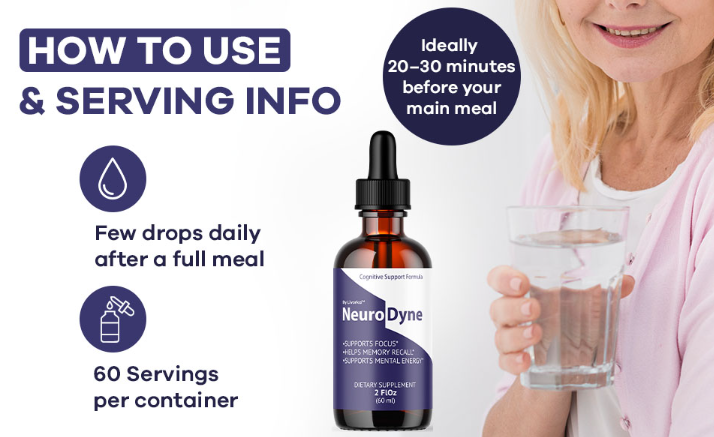
The supplement usually comes in a liquid or drop format, rather than pills or capsules, and is sold online through limited-time offers and discount bundles.
How It’s Positioned
The marketing narrative around NeuroDyne often pivots on three big ideas:
Natural ingredients — derived from plants and traditional herbal sources.
Cognitive support — boosting memory, focus, and mental clarity.
Modern lifestyle needs — helping today’s busy professionals, students, and older adults cope with stress and cognitive load.
These kinds of messages are broadly appealing, especially in a world where burnout, brain fog, and aging-related memory concerns are common.
Ingredients & Their Reputed Roles
An accurate ingredient profile is essential for evaluating any supplement. While NeuroDyne’s official marketing lists several compounds commonly found in brain health formulas, transparency and consistency across sellers vary — which is something we’ll unpack later.
Here are some of the components most frequently mentioned in NeuroDyne’s formula:
1. Ginkgo Biloba Leaf
A well-known herbal extract traditionally used in cognitive support supplements. Ginkgo is thought to promote blood flow to the brain, which may help deliver oxygen and nutrients to neurons — a factor linked to memory and focus.
Research Snapshot: Some studies suggest Ginkgo may offer modest benefits in memory performance, particularly in older adults, but results are mixed and not definitive.
2. Bacopa Monnieri
An Ayurvedic herb often included in nootropic blends. Bacopa has been studied for its potential role in supporting memory formation and processing speed.
Note: Benefits from Bacopa typically emerge over weeks or months of consistent use — not instantaneously.
3. Phosphatidylserine
This compound is a phospholipid found in high concentrations within brain cell membranes and is thought to support neural communication.
Some research has linked phosphatidylserine supplementation to improvements in cognitive function in older adults, though it’s still an area of ongoing study.
4. Huperzine-A
A natural compound that may influence levels of acetylcholine, a neurotransmitter involved in learning and memory processes.
5. Other Botanicals and Nutrients
Across different official pages, ingredients like St. John’s Wort, vitamins B6 and B12, and other plant-based compounds are mentioned.
However, marketing materials vary in how clearly they disclose exact dosages or ingredient lists — a red flag we’ll discuss shortly.
🔥(LIVE SALE) TAP NOW AND CLAIM 40% OFF SPECIAL
What Claims Does NeuroDyne Make?
On official style websites, Neurodyne Work is touted as offering various cognitive benefits:
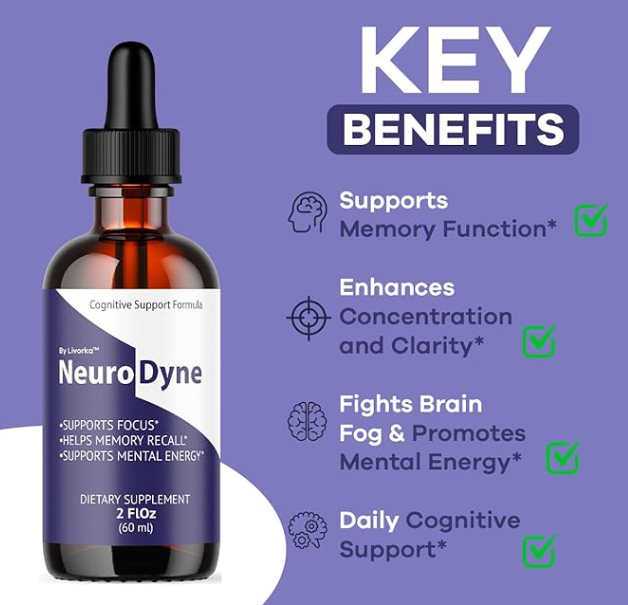
Improved memory recall
Sharper focus and concentration
Reduced brain fog and clearer thinking
Enhanced mental energy and stamina
Support for long-term brain health
These are attractive benefits, especially for students, professionals facing high cognitive demands, and older adults worried about age-related decline.
On paper, this sounds promising — but it’s important to distinguish marketing language from scientific proof.
The Science: What Evidence Exists?
Here’s where things get nuanced.
Individual Ingredients Have Some Research
Many of the ingredients mentioned — especially Ginkgo biloba, Bacopa monnieri, and phosphatidylserine — have been studied individually in the context of cognitive health. Some research suggests:
Bacopa may support memory with long-term use.
Ginkgo might improve blood flow and provide modest cognitive benefits.
Phosphatidylserine could play a role in neural communication.
But it’s crucial to understand:
None of these studies directly validate the NeuroDyne product itself.
There is no publicly available clinical trial confirming that NeuroDyne’s specific formulation delivers the advertised results. No independent research has been published proving that NeuroDyne can reverse cognitive decline or significantly enhance brain performance.
Supplements vs. FDA Approval
Dietary supplements like NeuroDyne are not FDA-approved as medications. This means:
The FDA doesn’t verify their effectiveness.
Claims about treating or curing diseases (like Alzheimer’s) are not evaluated or endorsed.
Labels may state “made in an FDA-registered facility” or “GMP compliant,” but this refers to manufacturing standards — not clinical proof of benefit.
Controversies & Red Flags
Despite the appealing pitch, NeuroDyne has become associated with a number of concerns and controversial practices.
1. Marketing Tactics Raise Skepticism
Investigations into NeuroDyne’s online marketing show classic bait-and-switch and fear-based tactics:
Long video advertisements that imply secret scientific breakthroughs but never disclose the formula.
AI-generated deepfake endorsements of celebrities or medical professionals.
False claims about FDA approval or patented research.
These are common traits of high-pressure supplement marketing rather than evidence-based health communication.
2. Website Trust Issues
Web safety checkers have flagged sites like the NeuroDyne storefronts as high-risk due to hidden ownership, weak traffic, and associations with other low-trust domains.
3. Ingredient Transparency Is Weak
Neurodyne Where To Buy While official pages list some components, they often fail to show a standardized supplement facts label with precise dosages — making it hard to evaluate what exactly you’re ingesting.
4. Customer Complaints & Subscription Problems
Independent reviews (e.g., Trustpilot) show a high proportion of negative experiences, including:
Difficulty canceling subscriptions.
Hidden recurring billing.
Poor response from customer service.
Unclear or misleading product information.
These kinds of after-purchase issues are red flags when choosing any health supplement.
🔥(LIVE SALE) TAP NOW AND CLAIM 40% OFF SPECIAL
Safety & Side Effects
On the surface, NeuroDyne contains ingredients generally considered safe when taken in common supplemental amounts. But there are important safety considerations:
Potential Risks
Interactions with Medications: Some components like St. John’s Wort can interact with antidepressants, blood thinners, and other drugs.
Varying Quality: Without transparent third-party testing, purity and dosage consistency are uncertain.
Mild Side Effects: Users may experience headaches, stomach discomfort, or lightheadedness — though these reports are anecdotal and not scientifically verified.
Always talk to a healthcare provider before beginning any supplement, especially if you’re on medication, pregnant, or have underlying health conditions.
So, Does NeuroDyne Work?
Here’s the honest bottom line:
📌 Realistically
Some individual ingredients in NeuroDyne do have limited scientific support for general brain health.
No clinical trials validate the specific NeuroDyne formula.
Many marketing claims extend beyond what evidence supports.
📌 Practical Perspective
Supplements are often best thought of as additional support, not quick cognitive fixes or cures for serious neurological issues. For most people, lifestyle factors — sleep, nutrition, exercise, stress management — have a far stronger impact on cognitive function than any supplement.
If you choose to try NeuroDyne or similar products, do so with measured expectations and informed awareness.
🔥(LIVE SALE) TAP NOW AND CLAIM 40% OFF SPECIAL
Better, Evidence-Based Ways to Support Brain Health
Neurodyne Rather than relying on hyped supplements alone, consider focusing on well-established practices that research consistently supports:
🧠 Sleep Matters
Deep, restorative sleep is critical for memory consolidation and cognitive performance.
🥦 Balanced Nutrition
Diets rich in omega-3s, antioxidants, and whole foods nourish the brain.
🏃♂️ Physical Activity
Exercise improves blood flow and neuroplasticity.
🧘♀️ Stress Management
Chronic stress can impair cognition — mindfulness, meditation, and adequate downtime help buffer this.
📚 Mental Stimulation
Learning, puzzles, reading, and social engagement all strengthen brain circuits.
Conclusion
NeuroDyne Drops Brain Supplement sits at the intersection of popular desire for cognitive enhancement and modern online marketing flair. While it contains ingredients with some research backing, there’s no rigorous proof that the formula delivers the dramatic effects sometimes implied in ads.
If you’re curious about brain health supplements:
✨ Be skeptical of flashy online pitches.
✨ Prioritize transparency, third-party testing, and clinical evidence.
✨ Consult a doctor, especially if you take other medications.
And above all, invest in lifestyle habits that truly bolster cognitive resilience.

Write a comment ...